 |
||
 |
|
|
 |
 |
 |
||||
|
|
|
|
|
|
|
 |
 |
 |
||||
|
|
|
|
|
|
|
 |
 |
 |
||||
|
|
|
|
|
|
|
 |
 |
 |
||||
|
|
|
|
|
|
|
 |
 |
 |
||||
|
|
|
|
|
|
|
 |
 |
 |
||||
|
|
|
|
|
|
|
 |
 |
 |
||||
|
|
|
|
|
|
|
 |
 |
 |
||||
|
|
|
|
|
|
|
 |
 |
|||
|
|
|
|
|
 |
 |
||||||||
 |
|||||||||
 |
|||||||||
 |
|||||||||
|
|
|
|
|
|
|
|
|
|
 |
 |
 |
||||
|
|
|
|
|
|
|
 |
 |
 |
||||
|
|
|
|
|
|
|
 |
 |
 |
||||
|
|
|
|
|
|
|
 |
||||||
 |
||||||
 |
||||||
|
|
|
|
|
|
|
©2009–2016 Sherry Skipper Spurgeon. All Rights Reserved. |
||
|
|
|
 |
|
|
|
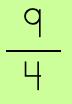
An improper fraction is a fraction where the numerator is larger or greater than the denominator. An example would be: |
||
|
|
|
 |
|||
 |
|||
|
|
|
|
 |
||||
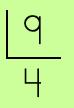
Step 1: Mark the numerator. |
||||
|
|
|
|
|
 |
||||||
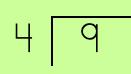
Step 2: 'Flip' the mark over. Now your dividend and divisor are in place.
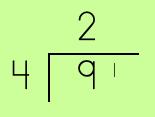
Now you divide. We are using short-cut division here and doing the subtraction and re-grouping in our heads. The remainder is placed up along the top of the number (it looks like an exponent but it is NOT an exponent). |
||||||
 |
||||||
|
|
|
|
|
|
|
 |
|||||||
remainder of 1 is the numerator |
|||||||
Step 3: Take the remainder. In this case, the remainder was 1. This now becomes the numerator. The denominator remains the same (4). |
|||||||
original denominator remains the same (4) |
|||||||
|
|
|
|
|
|
|
|
 |
||||
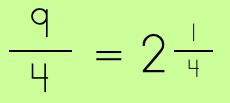
Step 4: Put the fraction next to the whole number. You now have your answer! You have converted an improper fraction into a mixed number. |
||||
|
|
|
|
|
 |
|||
 |
|||
|
|
|
|
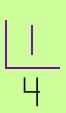
Let's say you have already done all the work above and you want to convert that fractional amount into a decimal. WELL, you've already done all the 'hard' work…you just need to change that remainder into a decimal! Yep, that's it! The fractional remainder is what becomes the decimal amount. Let's get to it, shall we? |
|||
 |
|||
|
|
|
|
 |
||||||||
 |
||||||||
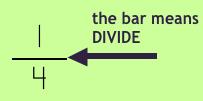
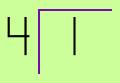
Step 1: Leave the whole number (2) alone. You only need to work with the fraction. Just like when converting an improper fraction to a mixed number, you need to mark the numerator. |
||||||||
dividend |
||||||||
divisor |
||||||||
|
|
|
|
|
|
|
|
|
 |
||||
Step 2: Flip the mark over. |
||||
|
|
|
|
|
 |
||||
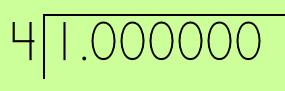
Step 3: Place a decimal point above the division bar. Include a decimal AND several zeroes for place-holders AFTER the dividend (in this case, the 1). The zeroes do not add any value; they are simply place-holders. |
||||
|
|
|
|
|
 |
||||
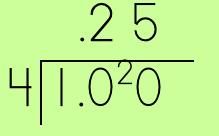
Step 4: Divide, just like you normally would. The example shows the short-cut division where the remainders are placed within the dividend. When you have NO remainder, then you are finished! |
||||
|
|
|
|
|
 |
||||
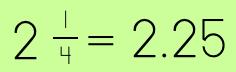
Step 5: Tack the decimal onto the whole number. |
||||
|
|
|
|
|